Learning fit
Subject, age, curriculum relevance, scientific appropriateness, and learning objective.
Designing a practical path for AR/VR adoption in Indian education.
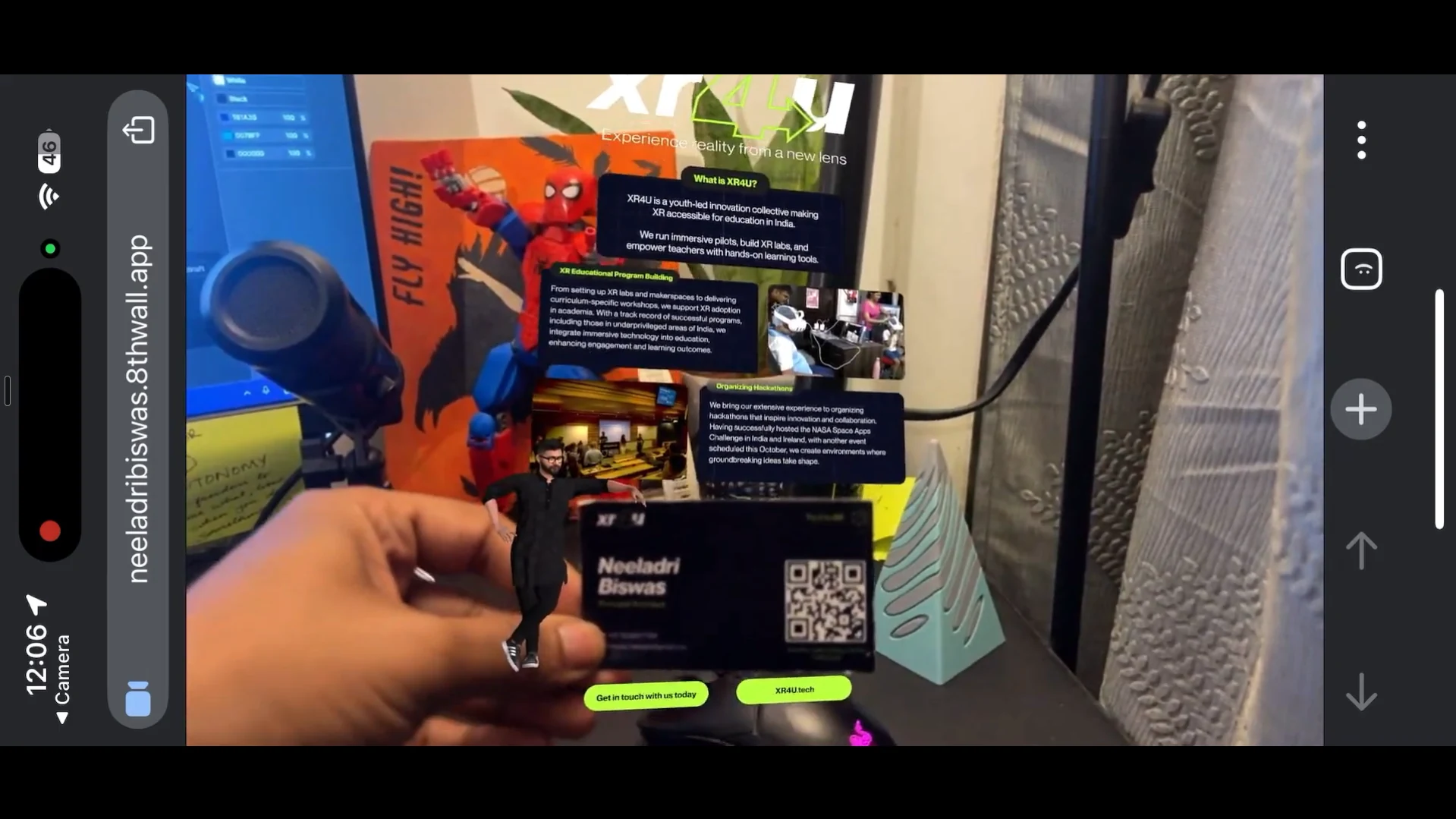
XR4U explored how Indian educational institutions could move from isolated AR/VR demonstrations to practical classroom use. The challenge was connecting available technology to teaching needs, curriculum, and day-to-day operations.
Our working concerns were educator readiness, locally relevant content, and curriculum alignment. We approached adoption as a research and implementation problem.
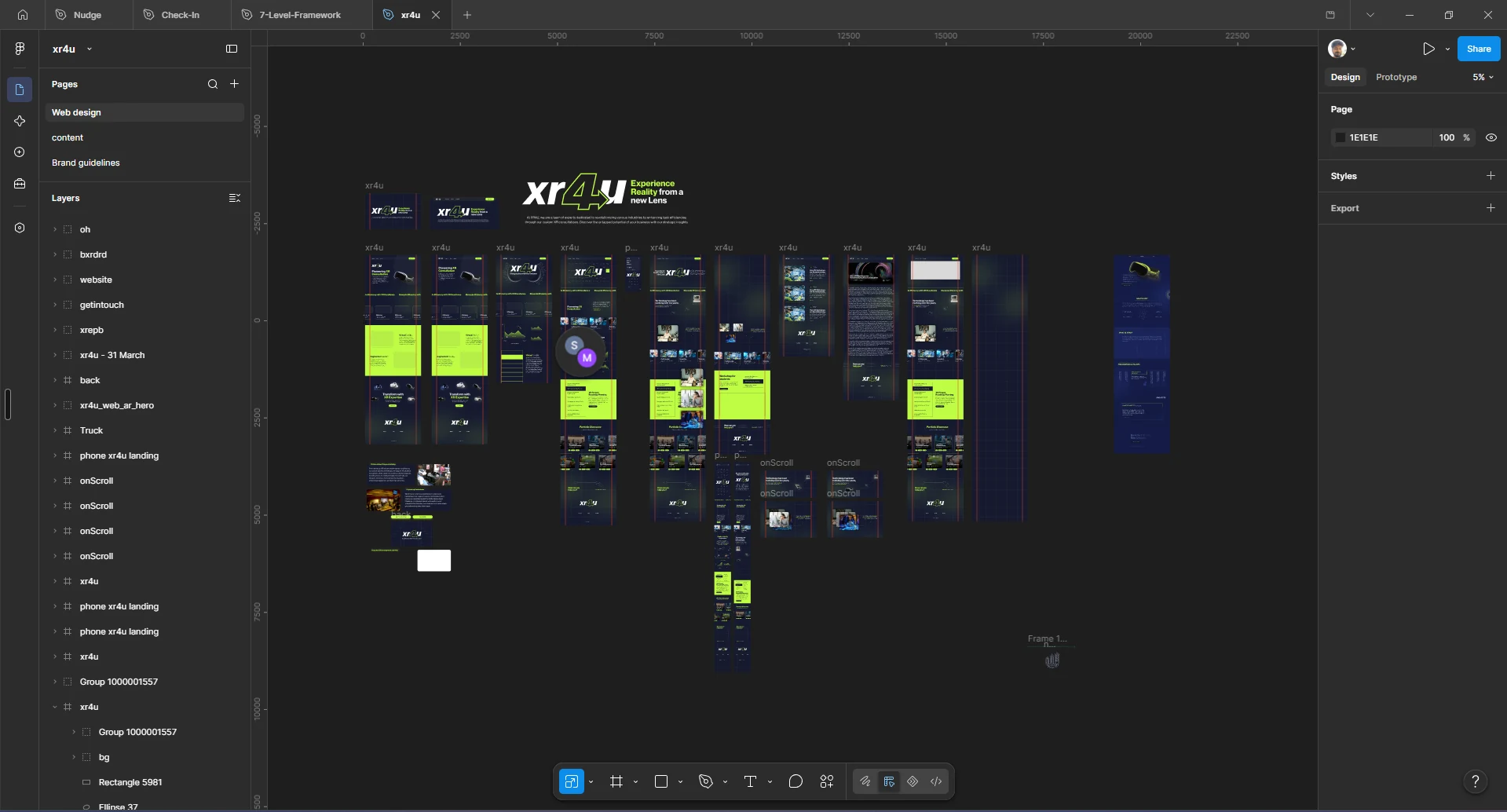
I worked with my college senior on this independent initiative, outside my employment. As Principal Investigator for the XR4U Initiation Programme, my responsibilities spanned research design, programme architecture, separate educator and student curricula, experience curation, and service design.
I also worked on questionnaires, consent and feedback instruments, schedules, equipment requirements, facilitator guidance, and repeatable standard operating procedures (SOPs). Business exploration included capital and operating costs, pilots, paid programmes, and potential makerspaces.
The proposed pathway increased exposure and institutional commitment gradually. A permanent lab was a possible later step, contingent on need and feasibility.
The exploratory feasibility study was designed around educator exposure to AR/VR, hands-on experiences using devices such as Meta Quest 3, structured questionnaires, and discussions.
Qualitative prompts sought specific teaching situations and classroom anecdotes alongside structured responses.
The educator track introduced immersive media through direct experience, then moved into sourcing 360° videos and 3D models, visualising and annotating objects, and developing lesson ideas.
By day three, the intended transition was from facilitator-led demonstration to educators teaching students with XR. Independent educator use was the goal.
The parallel student track moved through 360° media, interactive VR, environments supporting physical movement, and mixed reality. Experiences were selected around subjects and teaching objectives.
The opening combined audiovisual material and live demonstrations to introduce the experience before technical terminology.
We curated and evaluated experiences such as water-cycle and Earth-layer 360° content, Pollinator Park, human skeleton visualisations, solar-system mixed reality, and Google Earth in PC VR.
Evaluation surfaced navigation problems, long unskippable sequences, internet dependencies, limited local relevance, and interfaces that competed with understanding the lesson.
Subject, age, curriculum relevance, scientific appropriateness, and learning objective.
Hardware compatibility, stability, time required, ease of use, and facilitator support.
A short 360° experience could suit a concept better than a complex simulation. Higher interaction fidelity was not treated as evidence of better learning.
We began translating team knowledge into teacher and student curriculum SOPs, facilitator instructions, day-wise schedules, device preparation procedures, experience libraries, questionnaires, consent forms, curriculum mapping exercises, and evaluation notes.
The intention was for another trained facilitator to run the programme using the documentation, reducing dependence on individual team members.
An earlier five-day Delhi NCR education pilot in June 2024, through a CSR initiative funded by Anil Agencies Pvt. Ltd., reached more than 100 students in Grades 3–7 and included more than 250 XR sessions.
Earlier sessions informed questions about readiness, accessibility, motion sensitivity, facilitation, and curriculum alignment. These figures describe that earlier programme; they are not outcome measures for the later three-day Initiation Programme.
The longer-term proposition combined trained educators, curriculum resources, shared hardware, lesson templates, curated content, implementation SOPs, and—where justified—a makerspace or lab.
The central research question remained: under what conditions does immersive technology become practical enough for educators to use?
The feasibility and initiation framework describes a designed adoption pathway. Long-term independent adoption and improved learning outcomes are not established by the programme activity counts.