L1 · Thought
The immediate reactive trigger.
A personal reflection and execution tool designed to turn reactive thoughts into patterns you can examine—and small actions you can take.
SIFT began as an experiment in helping people move from an overwhelming or abstract thought toward something concrete enough to act on.
If a difficult thought or task could be progressively decomposed into smaller layers, the next action might become easier to see.
I built an AI-assisted cognitive decomposition interface that turned a high-level thought into progressively smaller, more actionable layers, and launched the experiment on Product Hunt in June 2026.
The moment SIFT was designed for was also the moment I least wanted to use SIFT. I had designed a cognitively expensive interaction for a cognitively overloaded moment.
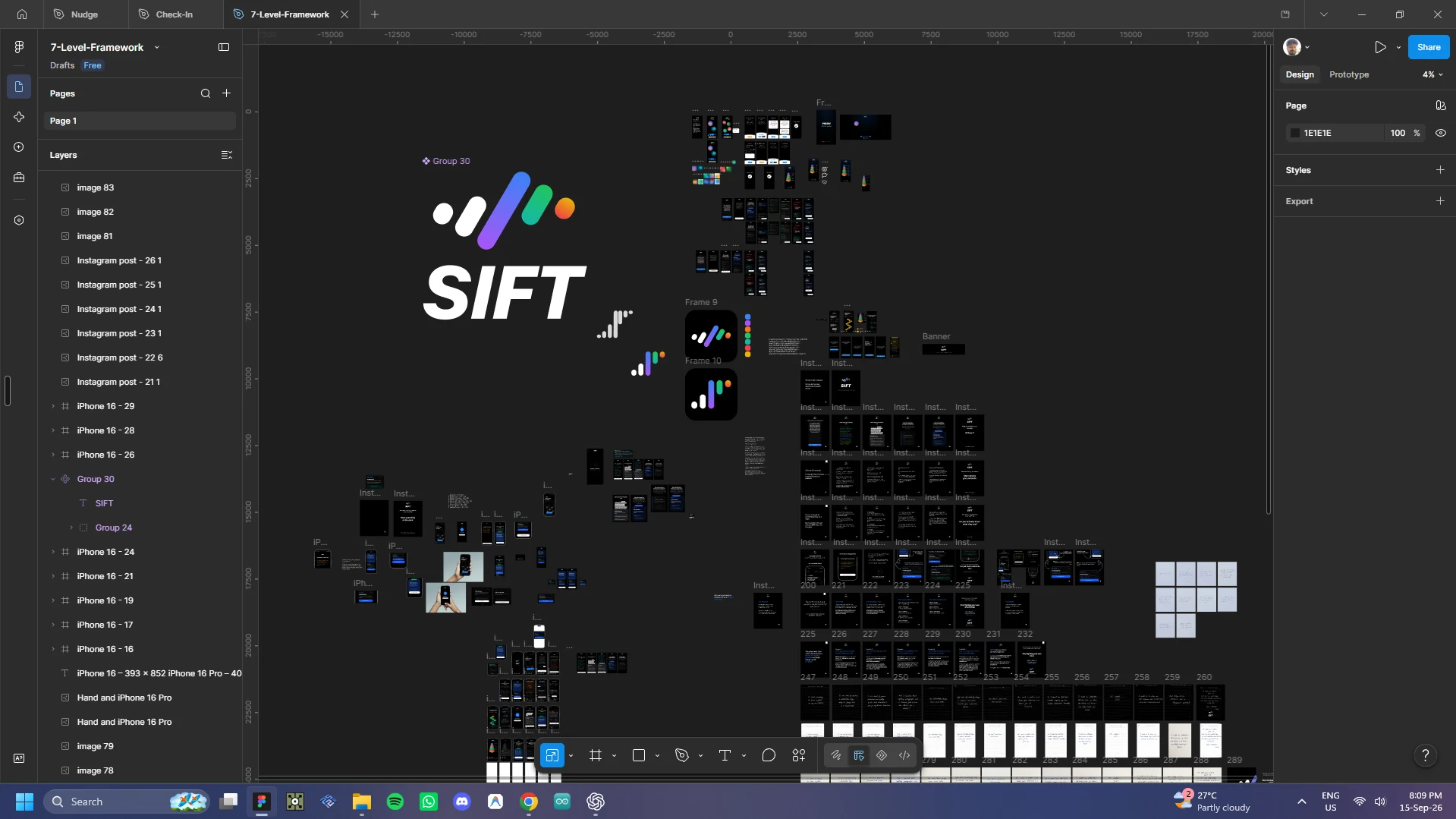
I built SIFT around my own experience of rumination and overthinking. The problem was not simply a lack of goals: overwhelm, avoidance, and familiar patterns could interrupt the move from intention to action.
SIFT explores that execution gap through three lenses: fading motivation, moments of mental paralysis, and reactive thoughts that may point to recurring beliefs or behaviours.
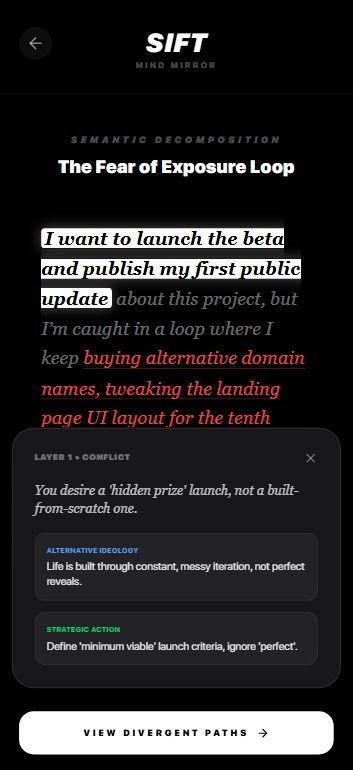
Voice dictation or text input captures a thought when friction occurs. LLM-powered serverless endpoints parse the entry into suggested emotional drivers, cognitive polarity, and possible points for change.
The seven-layer model organises the reflection:
The immediate reactive trigger.
The underlying rule or internal logic.
The framing lens applied to the situation.
The immediate behavioural response.
The recurring pattern.
The self-image associated with that pattern.
The longer-term direction the pattern may lead toward.
These layers are the product’s interpretive framework. The AI output offers hypotheses to reflect on, rather than established facts about a person.
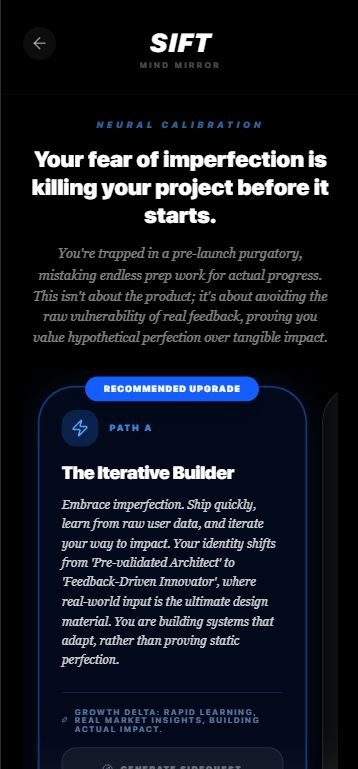
This feature presents two possible directions from an active loop: Path A explores a change in response; Path B examines the possible cost of repeating the habitual response.
The purpose is to make a decision point easier to notice.
The Stoic Identity Mirror and synthesis features aggregate recurring nodes across the seven layers. Second-person reflections and pattern cluster reports help surface themes across entries.
These are AI-generated reflections, not clinical diagnoses. Their value depends on whether users recognise, question, and find them useful.
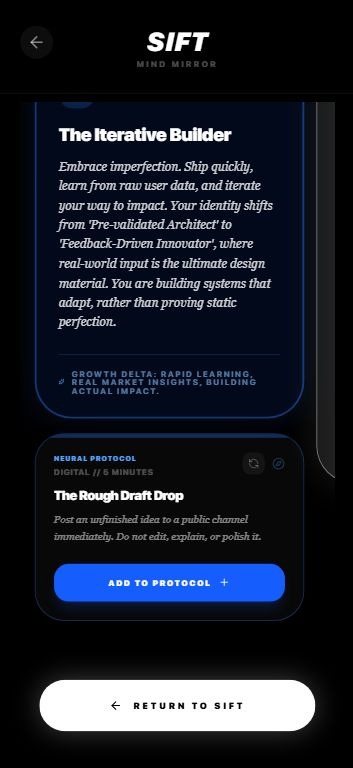
Side Quests translate an identified point of friction into a discrete action intended to take about two minutes. The design goal is to reduce initiation friction and create momentum.
Lower friction is a design intention; sustained behavioural change is not claimed as a measured result.
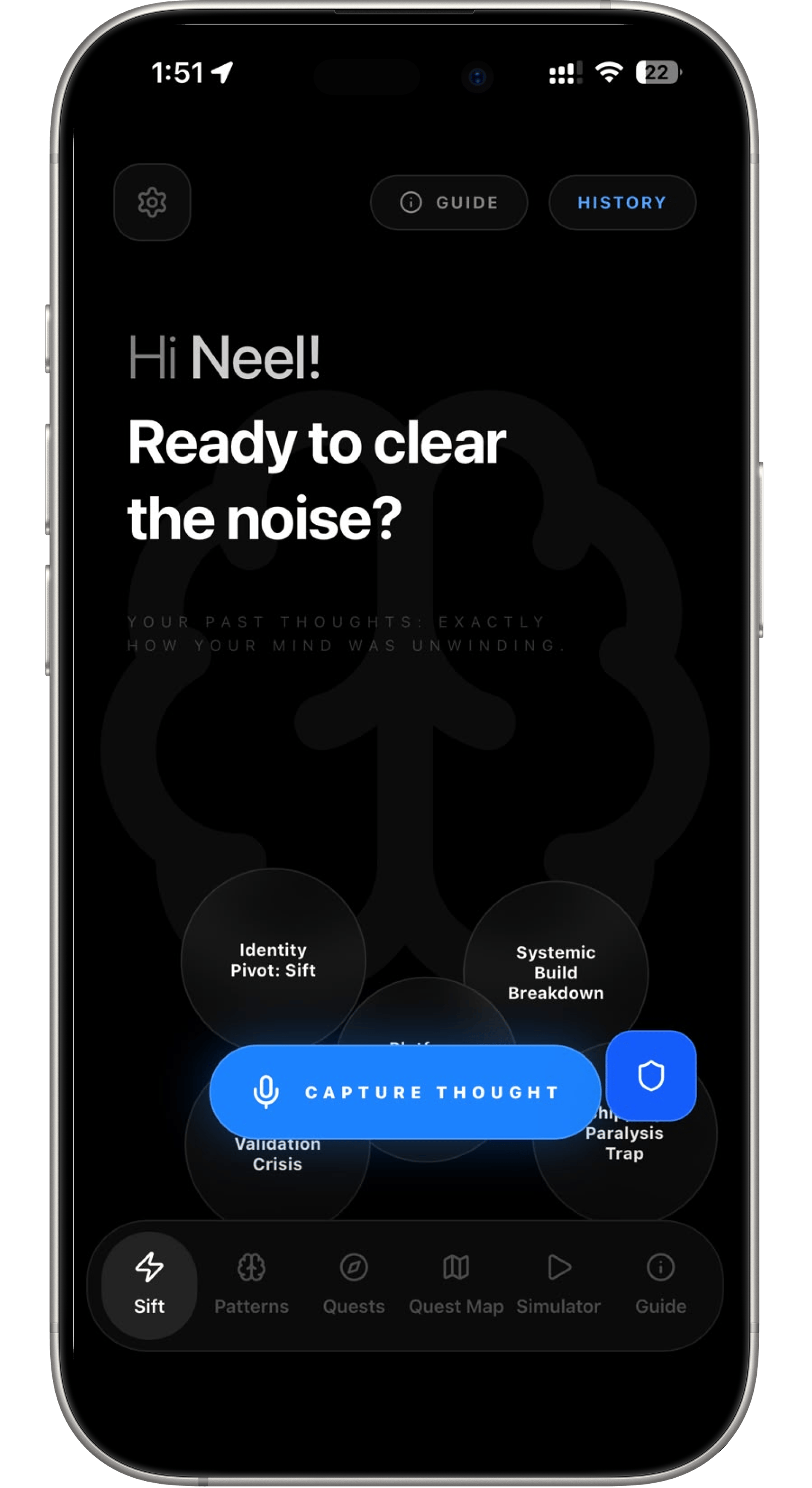
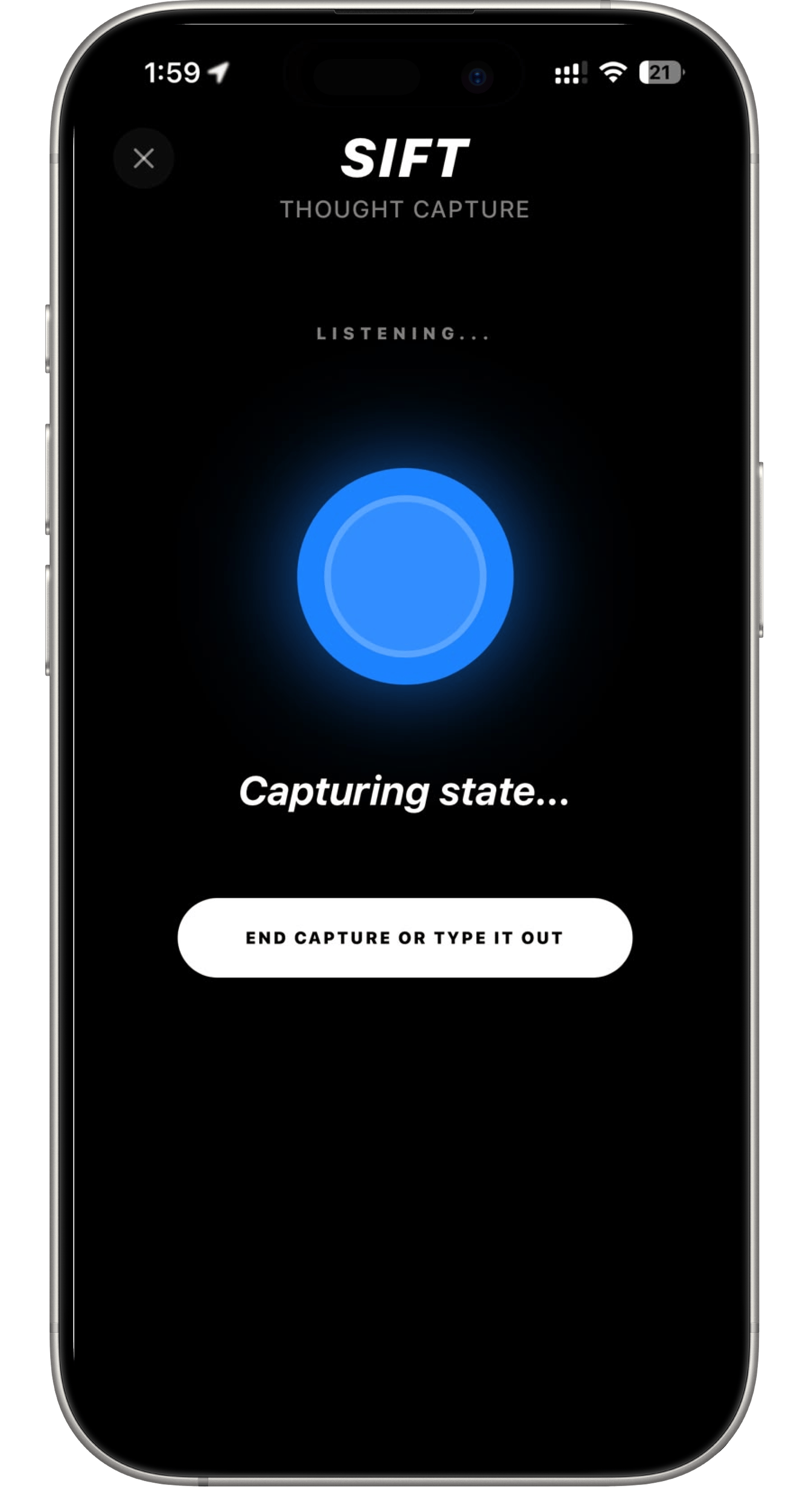
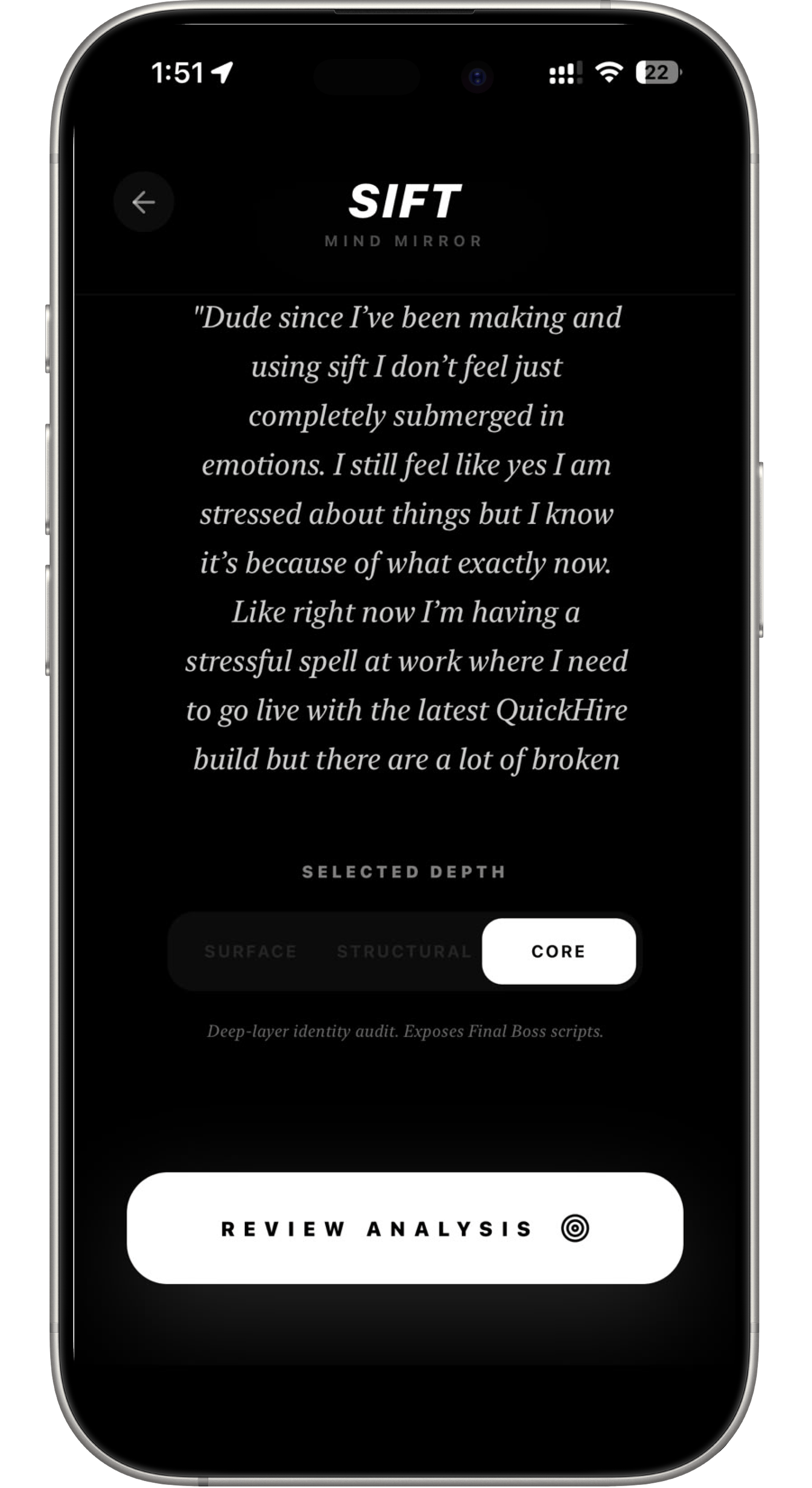
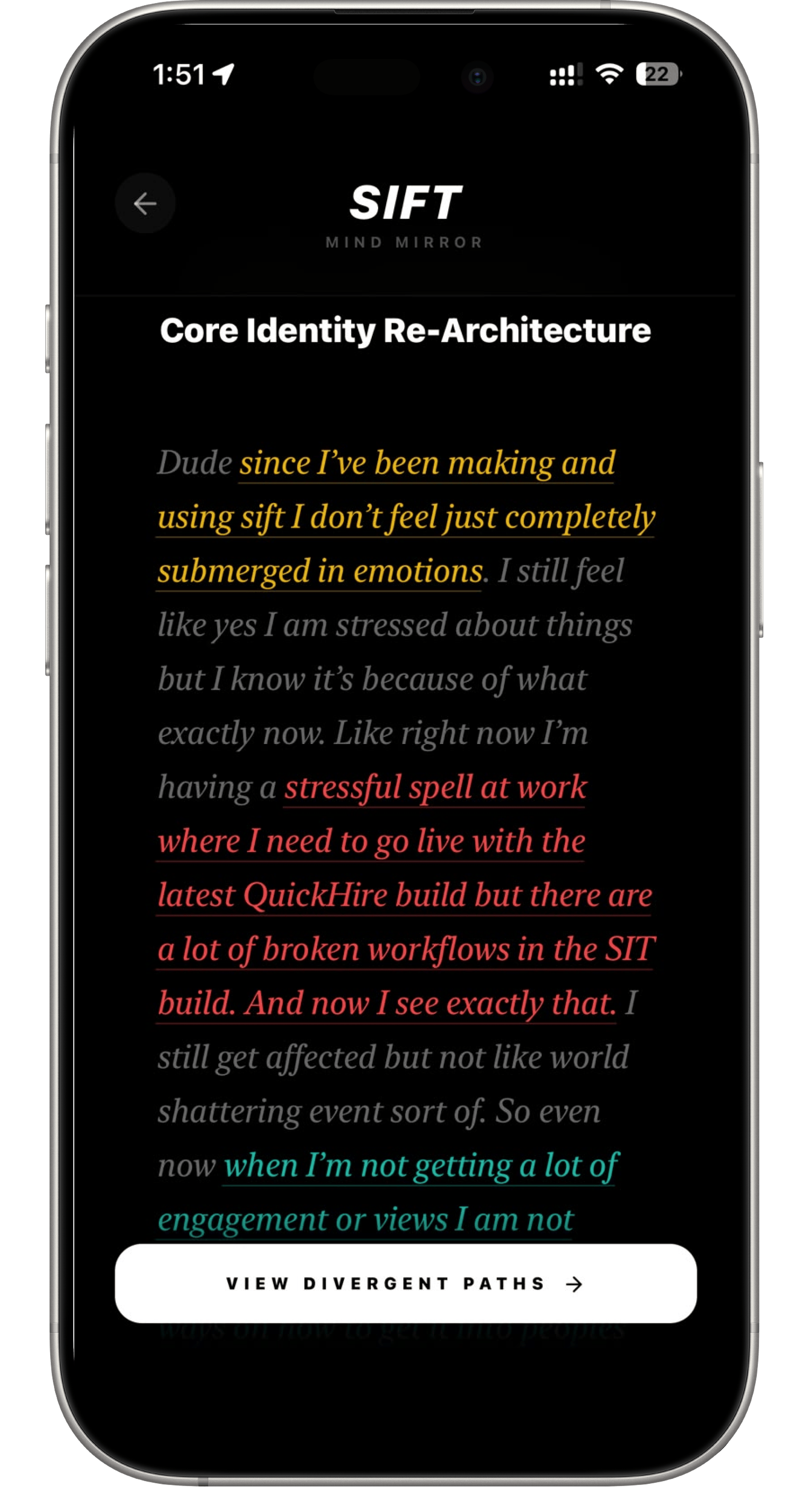
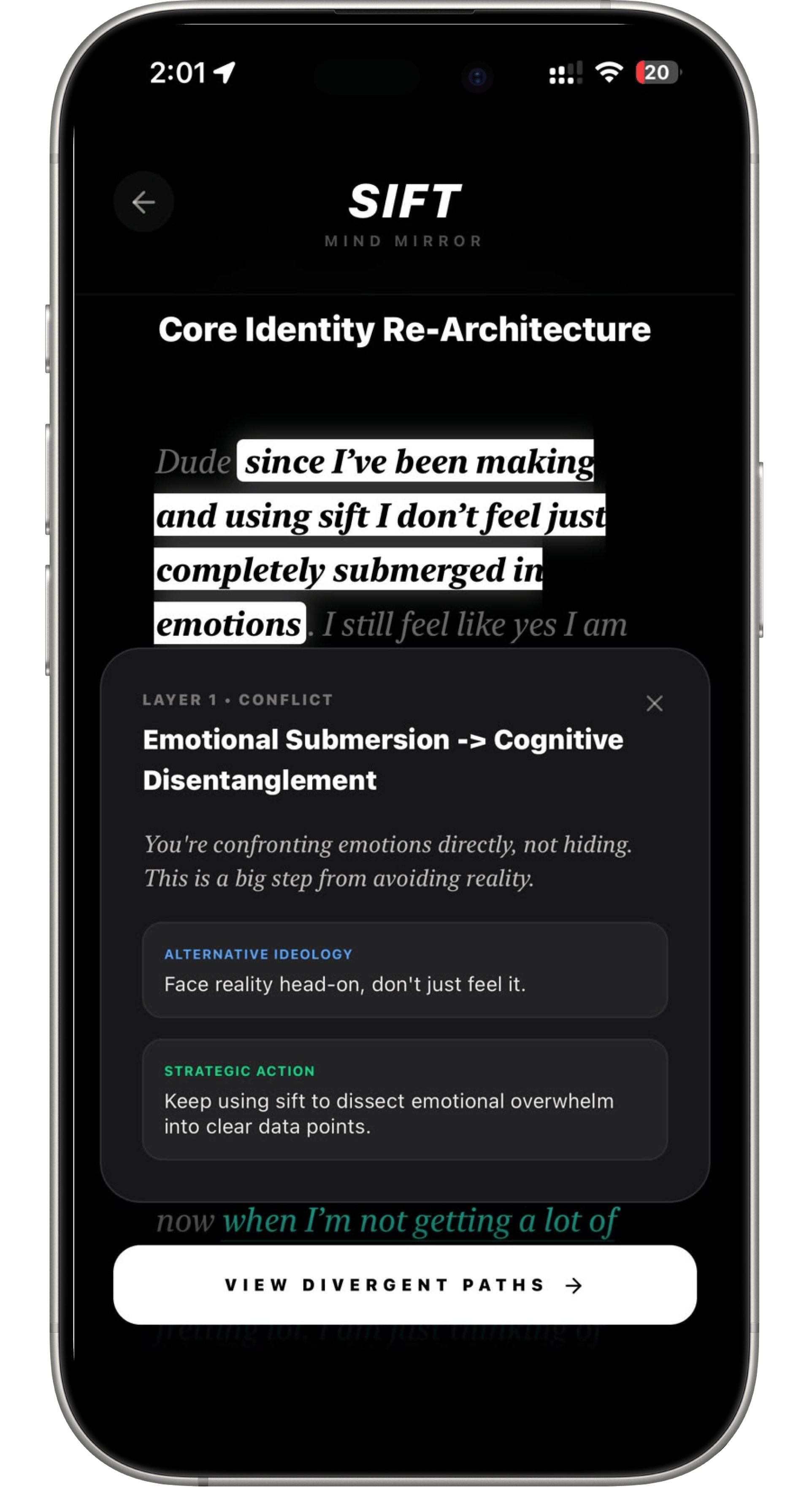
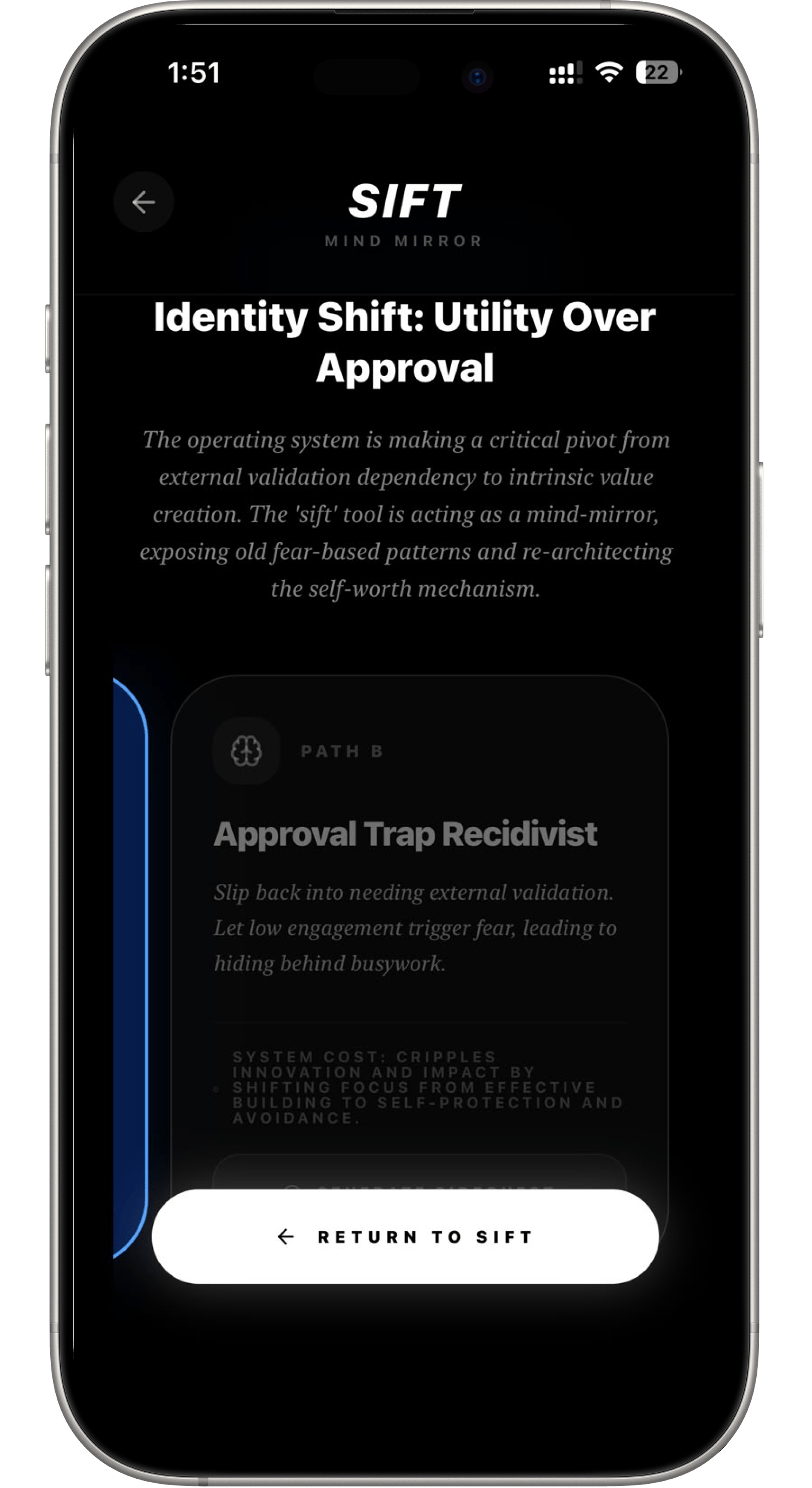
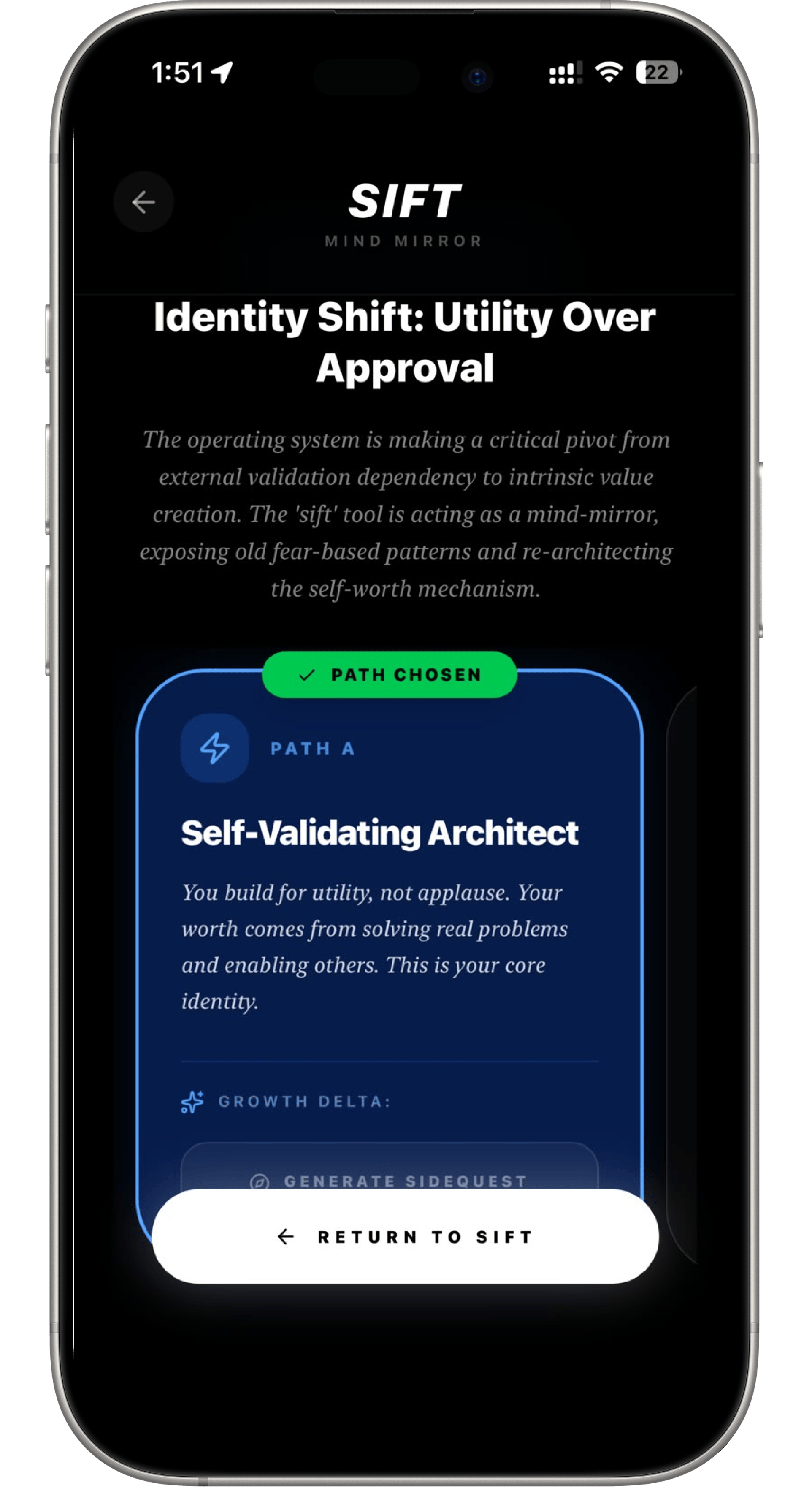
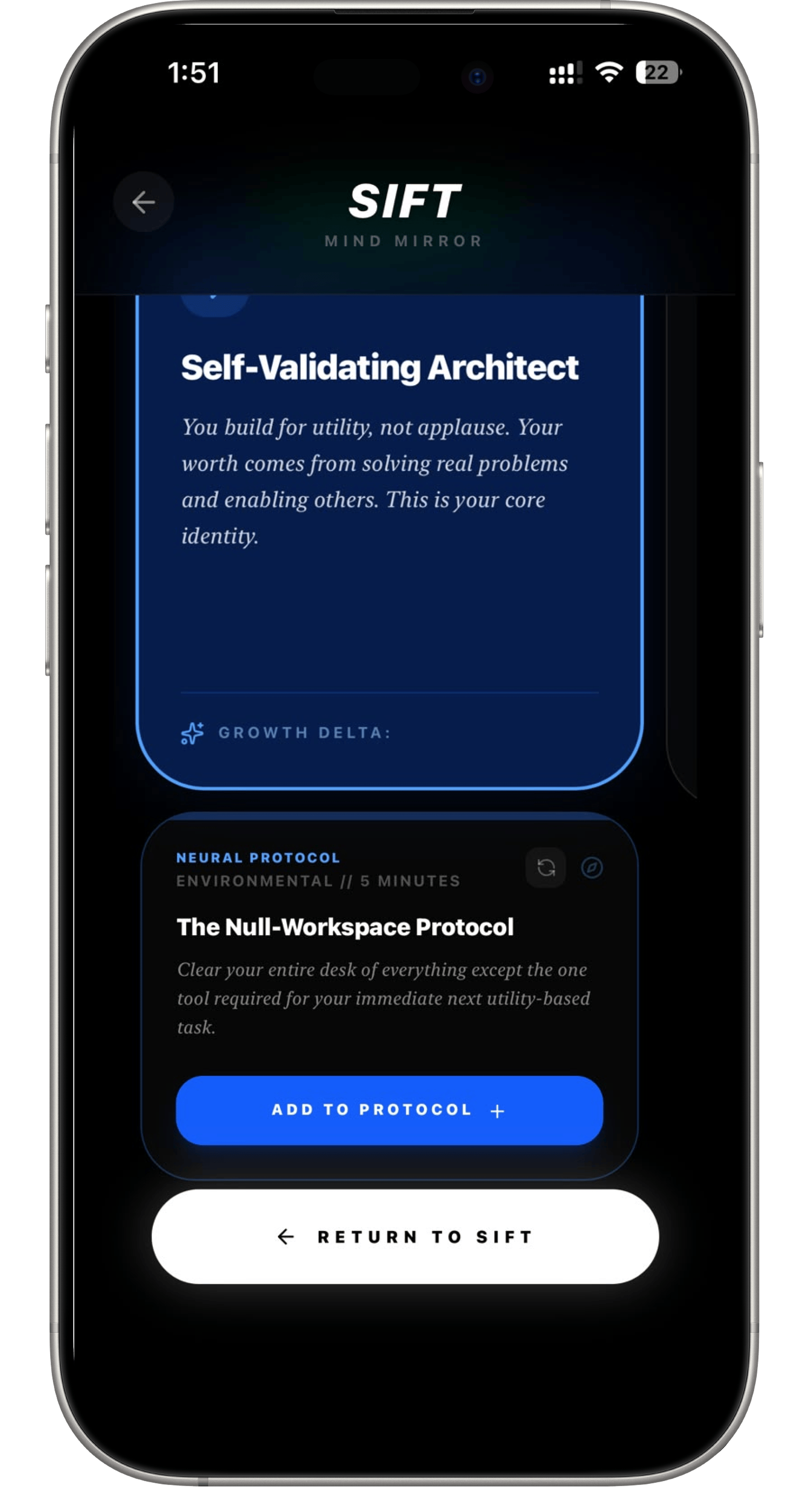
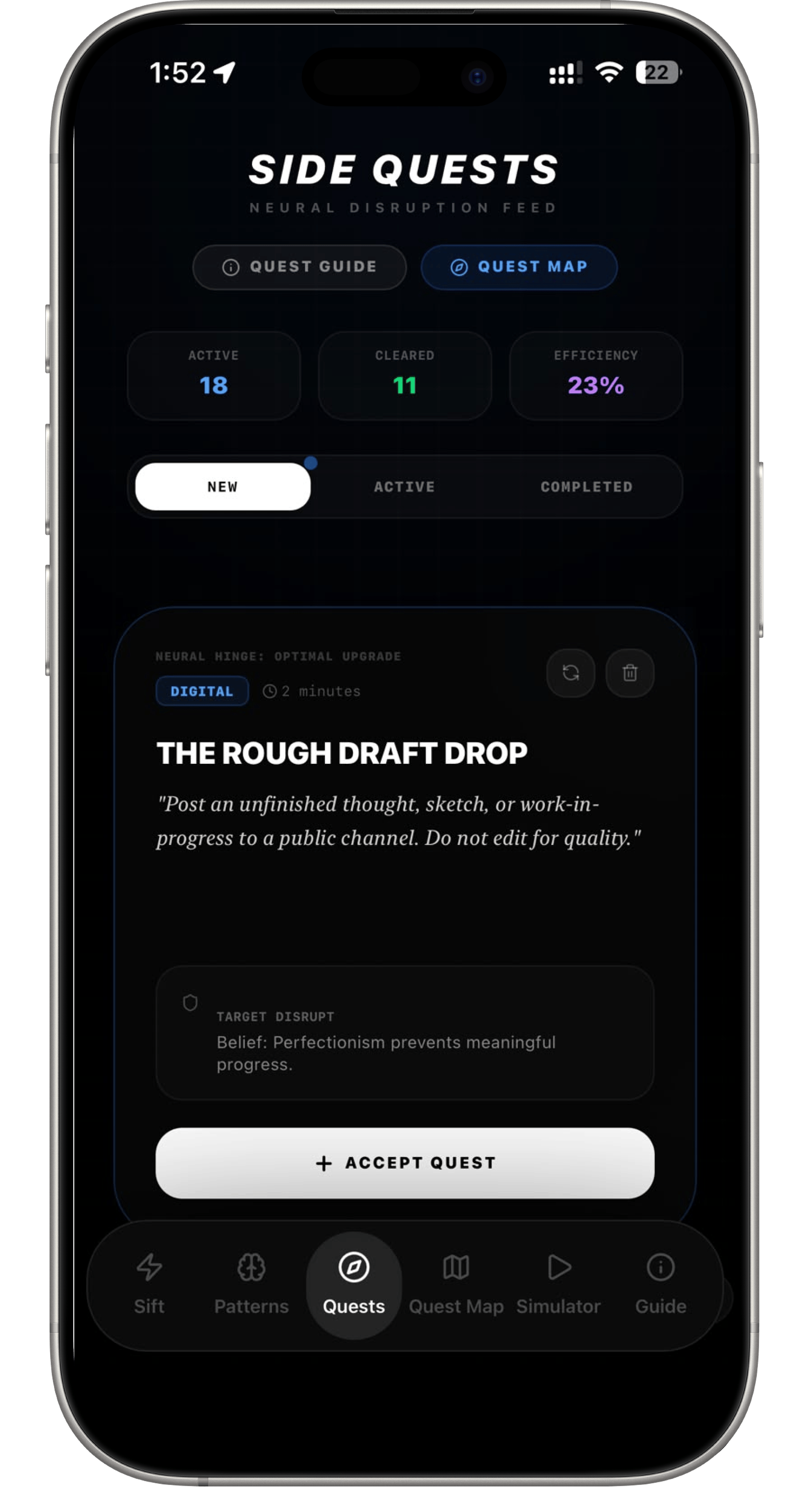
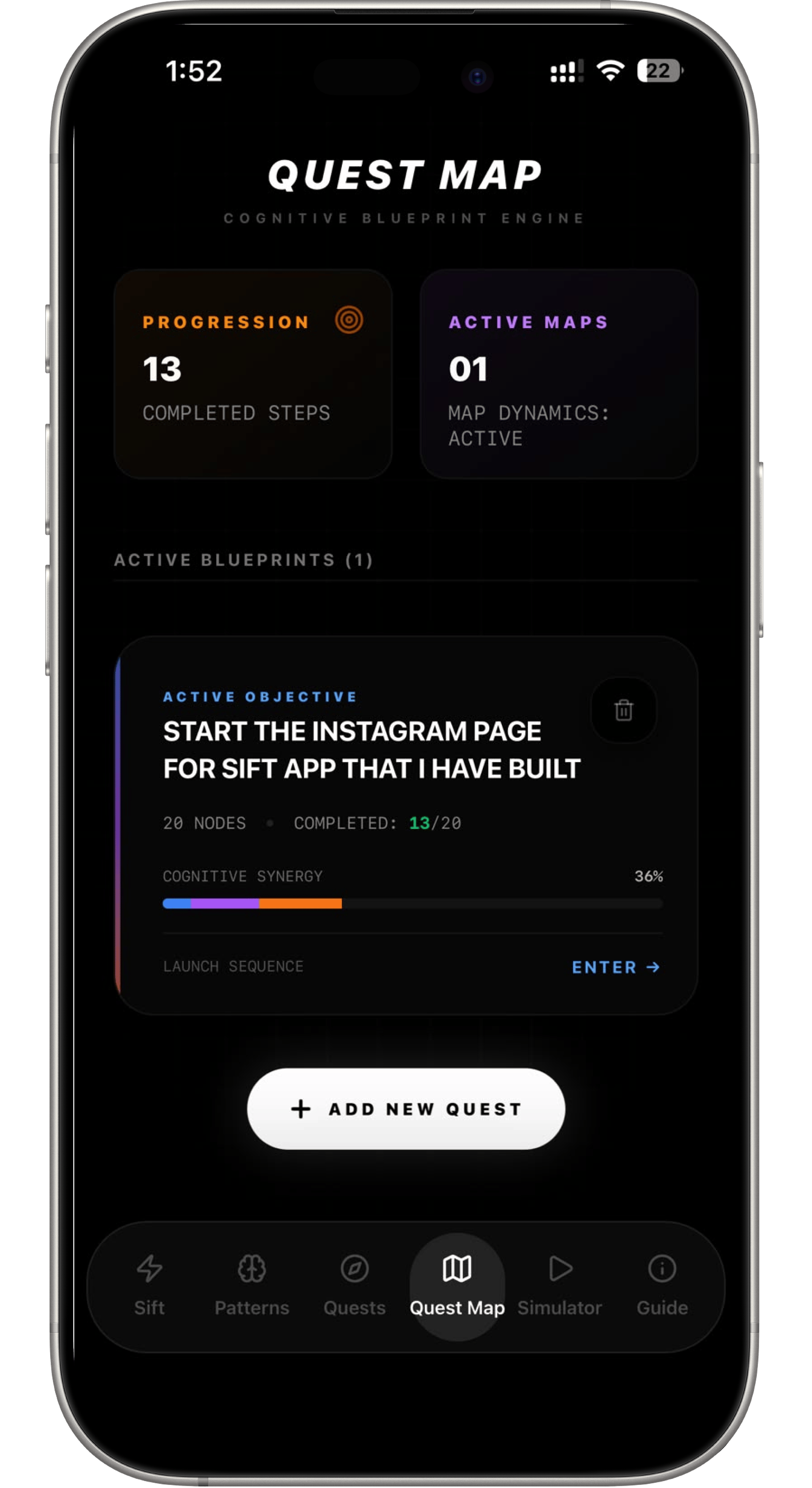
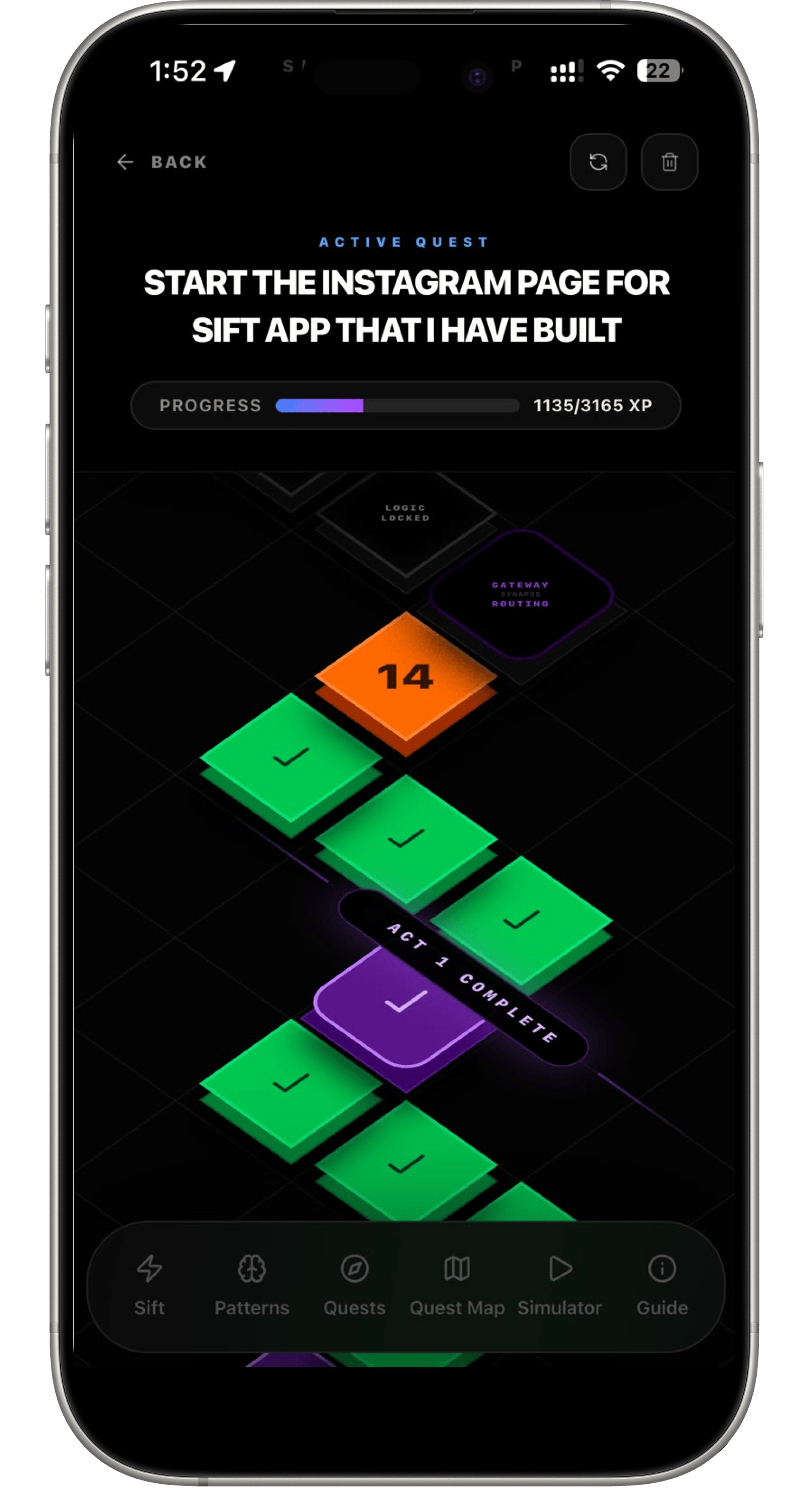
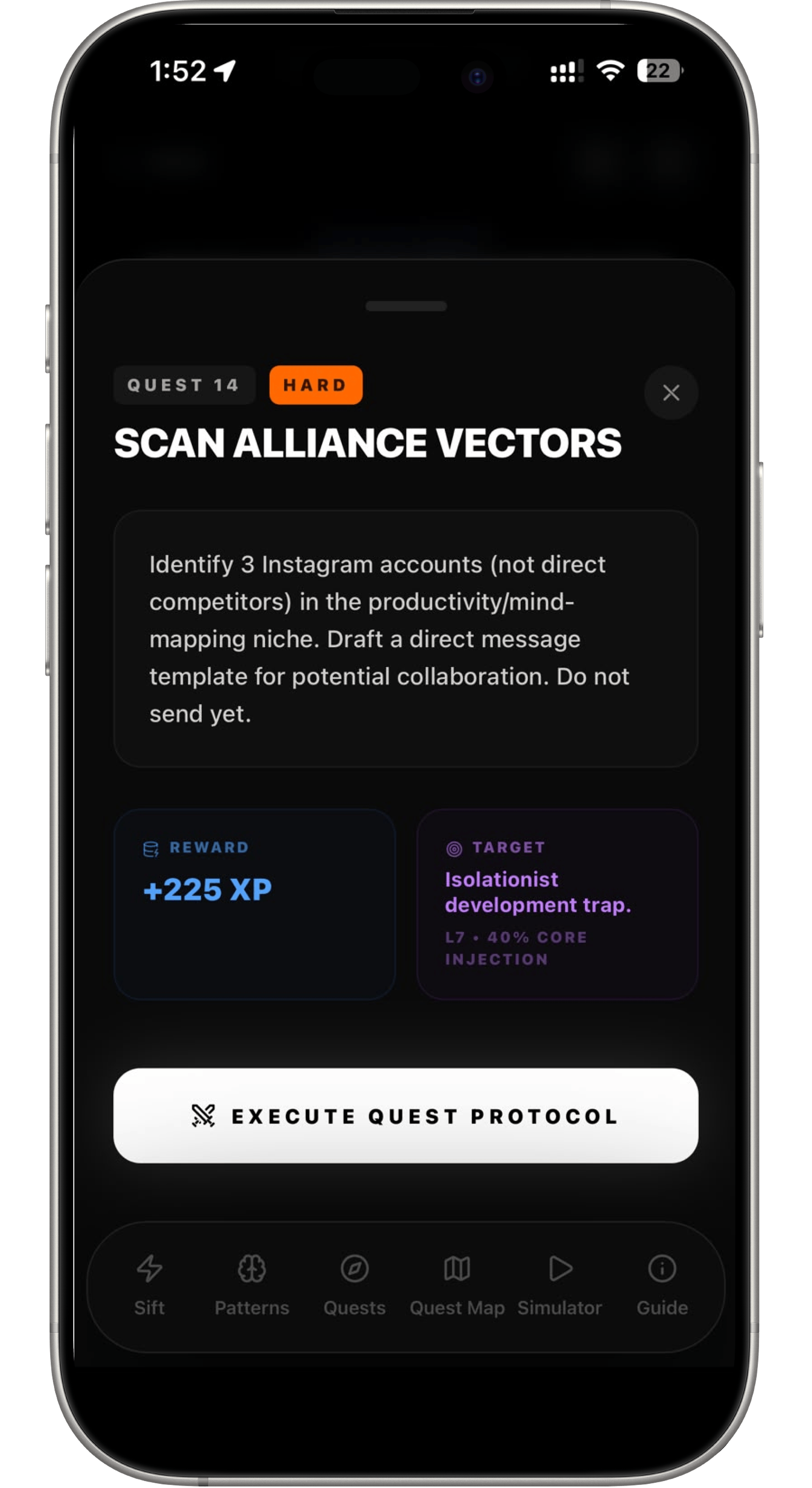
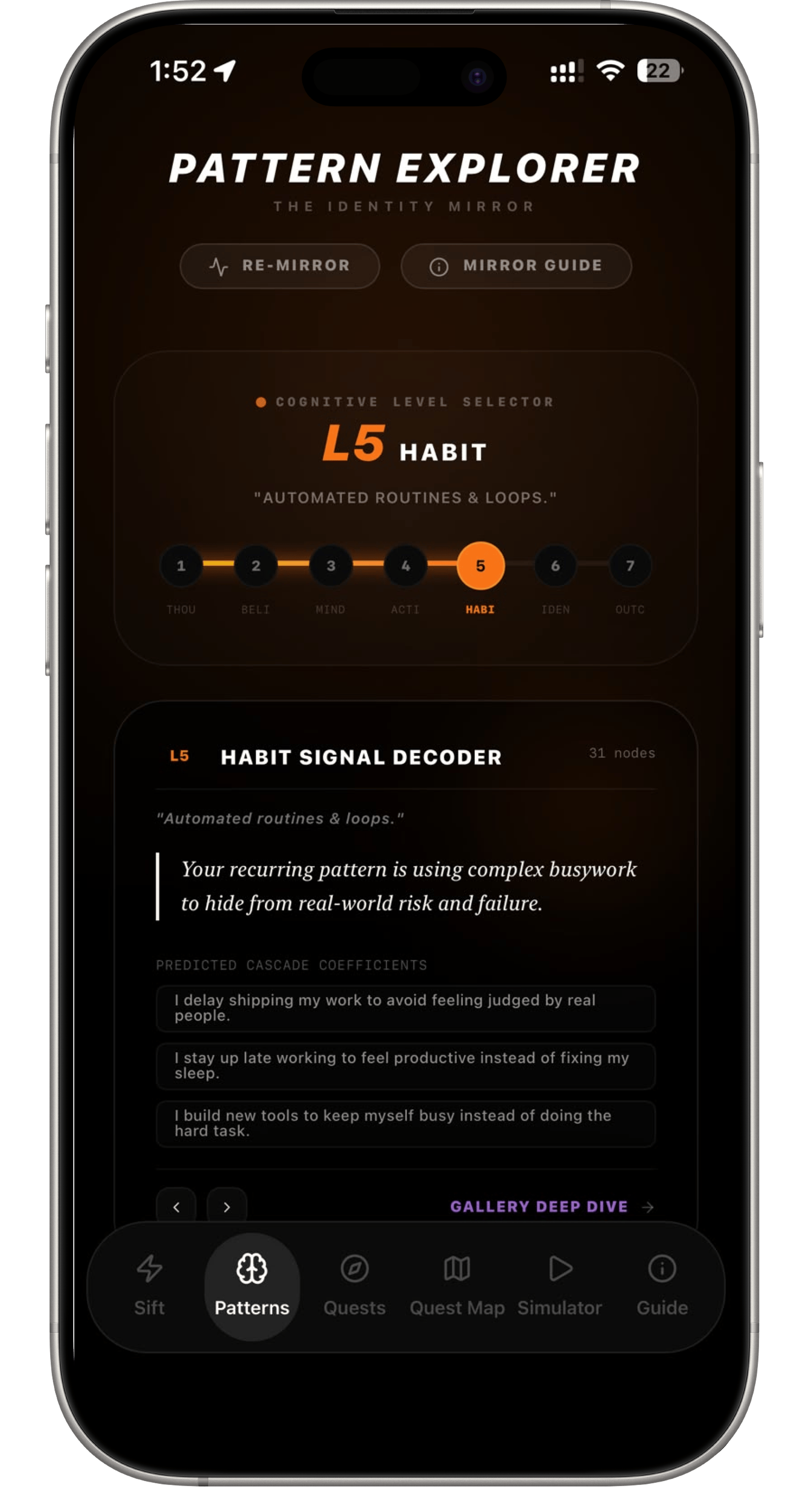
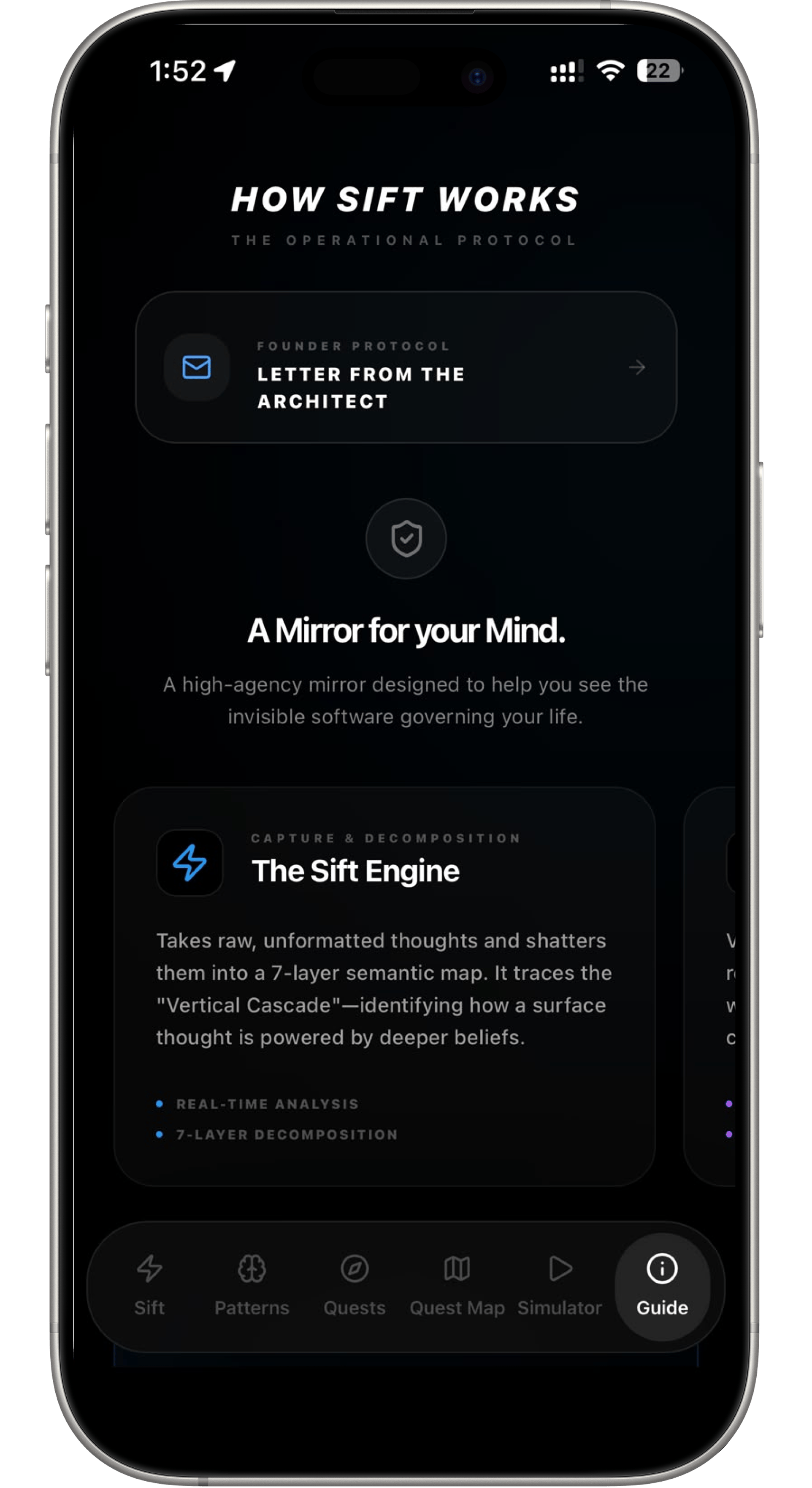
I built SIFT entirely on my own, connecting thought capture, structured reflection, and action suggestions within one experience.
I had designed a cognitively expensive interaction for a cognitively overloaded moment. The intervention also lived inside one of the environments already competing for attention.